
It’s about women. It’s about sisterhood. It’s about connection.
Why Do I Feel Like a Different Person Before My Period? (Understanding PMDD, Mood Changes, and the Body)
Why do I feel like a different person before my period? The emotional intensity and mood shifts that appear before your period are not random — they are the result of your brain's heightened sensitivity to hormonal fluctuations, amplified by inflammation, histamine activity, and nervous system stress that leaves the body with less capacity to filter and regulate during the luteal phase.
If you’ve ever found yourself feeling steady one week and completely unraveling the next—more anxious, more reactive, more overwhelmed, or even unlike yourself—you’ve probably wondered what’s actually going on.
For some women, this shift feels subtle. For others, it can feel intense and disorienting, like something takes over in the days leading up to their period.
This is often labeled as PMS or PMDD.
But labeling it doesn’t always help you understand it.
And understanding it is where things begin to change.
🌙 What Is PMDD?
PMDD (Premenstrual Dysphoric Disorder) is typically described as a more severe form of PMS, involving symptoms like:
-
mood swings
-
irritability or anger
-
anxiety or depression
-
fatigue
-
difficulty concentrating
From a conventional lens, it’s often attributed to sensitivity to hormonal shifts, particularly in the luteal phase when progesterone rises and then falls before menstruation.
That explanation points in the right direction, but it doesn’t fully explain why some women experience such intense symptoms while others don’t.
🔄 Hormones Are Part of the Story, Not the Whole Story
Your hormones are not operating in isolation.
They’re in constant conversation with:
-
your nervous system
-
your immune system
-
your gut
-
your environment
-
your overall level of stress and nourishment
So when symptoms show up before your period, it’s rarely just about estrogen or progesterone alone.
It’s about how your entire system is responding to those shifts.

🔥 Inflammation, Histamine, and the Immune Response
This is an area that is often overlooked.
There’s a growing understanding that histamine and mast cell activation can play a role in premenstrual symptoms.
Histamine is involved in the immune response and inflammation. For some women, levels can fluctuate alongside hormonal changes, especially in the luteal phase.
When the body is already dealing with:
-
underlying inflammation
-
gut imbalance
-
chronic stress
…it can become more reactive during this window.
That reactivity doesn’t just show up physically. It can affect mood, anxiety levels, and how the nervous system responds to everyday stressors.

🧠 The Nervous System + Emotional Intensity
The luteal phase tends to be more inward, more sensitive, and more reflective.
If your system is supported, that can feel like clarity.
If your system is overwhelmed, it can feel like everything is too much.
This is where many women experience:
-
heightened emotional responses
-
lower tolerance for stress
-
a stronger awareness of what isn’t working in their lives
The challenge is that instead of being able to process that information, it can feel like it’s happening to you.
🌊 You’re Not “Too Much”—Something Is Being Amplified
One of the most important shifts here is understanding that these feelings are not random. They are often an amplification.
The body has less buffer in this phase. Less capacity to filter, suppress, or override.
So what’s underneath tends to rise to the surface.
That doesn’t mean every thought is accurate or needs to be acted on. But it does mean there is information there worth paying attention to.
🌸 What Can Actually Help
Support here isn’t about shutting down the experience.
It’s about helping the body feel more resourced so that the experience isn’t overwhelming.
For many women, that includes:
-
stabilizing blood sugar throughout the cycle
-
supporting gut health and reducing histamine load
-
lowering overall inflammation
-
creating more space for rest, especially in the luteal phase
-
supporting the nervous system through simple, consistent practices
When the body feels safer and more supported, the intensity often shifts.
🌿 If You’re Wanting Support
If this is something you’ve been dealing with, you don’t have to try to piece it together on your own.
We’ve created herbal blends that support the nervous system, reduce inflammation, and help the body move through the cycle with more stability.
If you’re not sure what would be most supportive for you, you can reach out to our support team. We’ll help you figure out where to begin based on what you’re experiencing.

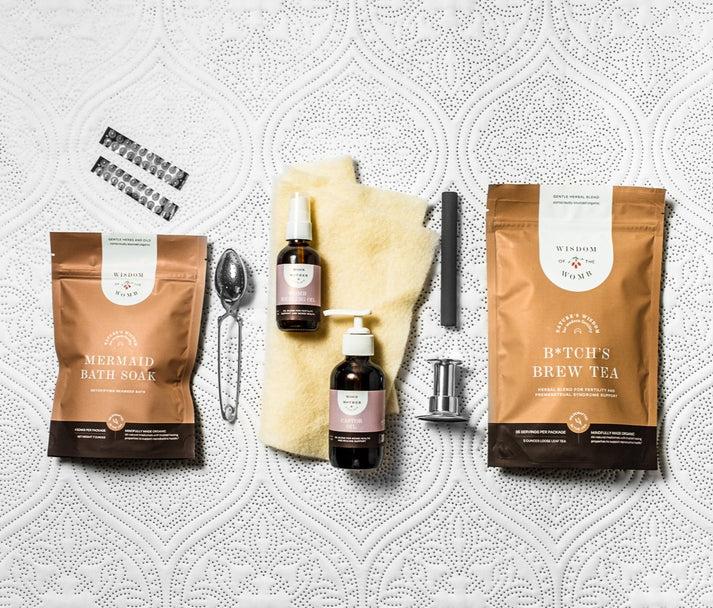
Our Picks for PMDD Support
Our products offer gentle, targeted support for the body systems most affected by PMDD.
Supportive options include:
-
Detox Tea — supports liver function to clear excess hormones and reduce toxic load
-
B*tch's Brew Tea — helps regulate blood sugar and ease the stress response for more balanced cortisol levels. Take a look at our PMS SOS Trio and our Complete PMS Support Bundle.
-
Mermaid Bath Soak — draws out impurities, supports circulation, and detoxifies the liver for more balanced hormones
-
Tension Tamer: Stress Relieving Oil Blend — soothes the stress response and supports nervous system calm during the luteal phase.
"I've had PMDD for over 16 years and drinking B*Tch's Brew Tea daily has turned the intensity level down on the crawl-out-of-my-skin anxiety, insidious harmful thoughts, and deep depression I can experience. This tea has been a literal life-line in helping me know that every cup I drink is actively balancing my systems so that I don't get to the week before my period and experience a dog-pile of other erratic hormone imbalances that intensify the already challenging PMDD symptoms."
Allyson P.
"I suffer from severe PMDD and have for so long. B*tch's Brew was recommended to me and the Universe took care of me with this one. HIGHLY recommend for those who struggle with diffult cycles."
Lena B.
-
For some women, hormonal shifts combined with inflammation, nervous system sensitivity, and underlying stress can contribute to depressive symptoms in the luteal phase.
-
There is increasing evidence that histamine and mast cell activity can influence inflammation and nervous system responses, which may contribute to PMDD symptoms in some women.
-
Yes. Blood sugar stability, gut health, and inflammatory foods can all influence how the body experiences hormonal shifts.
🌱 In Closing
These shifts before your period can feel confusing, especially when they don’t match how you feel the rest of the month.
But they’re not random.
There is a pattern, and there is a physiology underneath it. And when you begin to support the body in a more complete way, the experience of your cycle can begin to feel more steady and more understandable.
Written by Ariele Myers, Licensed Acupuncturist and Integrative Fertility Specialist with 20+ years supporting women’s reproductive health.