
It’s about women. It’s about sisterhood. It’s about connection.
Why Am I Not Ovulating? (Understanding What Your Body Might Need)

Why am I not ovulating and can it come back naturally?
Anovulation is rarely a malfunction — it's the body's response to underlying stress, depletion, inflammation, or metabolic imbalance, and ovulation can often return when those root conditions are addressed and the body feels resourced enough to prioritize reproduction.
If you’ve been tracking your cycle, trying to understand your fertility, or actively trying to conceive, not ovulating can feel confusing and discouraging.
You might be doing everything “right.” You might be watching for signs, using apps or tests, paying closer attention than ever before.
And still, ovulation isn’t happening consistently. Or at all.
It’s easy to assume something is wrong.
But ovulation is not just a switch that turns on and off. It’s something the body moves toward when the conditions are right.
🌙 What Does It Mean to Not Ovulate?
Ovulation is the process of releasing an egg from the ovary. It’s a key part of the menstrual cycle and necessary for conception.
When ovulation doesn’t occur, it’s often referred to as anovulation.
This can show up as:
-
irregular cycles
-
very long cycles
-
cycles without clear ovulation signs
-
missed periods
From a conventional perspective, this is often linked to hormonal disruptions.
That’s part of the picture, but not the whole of it.
🔄 Ovulation Is a Result, Not the Starting Point
Ovulation doesn’t happen in isolation.
It depends on a sequence of communication between the brain, the ovaries, and the rest of the body.
That communication is influenced by:
-
nourishment
-
stress levels
-
inflammation
-
metabolic health
-
overall energy availability
When the body doesn’t feel supported in these areas, ovulation may not occur. Not because the body is failing, but because it’s responding.

🔥 Common Reasons Ovulation Doesn’t Happen
There are many factors that can influence ovulation, including:
-
chronic stress and nervous system dysregulation
-
blood sugar instability
-
nutrient deficiencies
-
inflammation in the body
-
thyroid imbalances
-
PCOS/PMOS or other hormonal patterns
-
under-eating or over-exercising
Even when these aren’t extreme, they can still impact the body’s ability to move through the full cycle.
🌿 Tracking What's Actually Happening
One of the most empowering things you can do when ovulation feels non-existent or inconsistent is to actually see what your hormones are doing — day by day, cycle by cycle.
Mira tracks LH, E3G, PdG, and FSH at home, so instead of guessing whether ovulation occurred, you have real data showing you exactly what your body is doing. Over time, you can begin to see your unique patterns — and we can use that information to support you more precisely.
As your Mira Provider, we can view your numbers directly and tailor our product and supplement recommendations to what your body actually needs.
Use code 2WISDOMWOMB20 at checkout for your 20% discount, and list us as your provider when you set up your account. Learn more here.

🌊 The Body Needs Enough to Give
Ovulation requires energy.
It requires the body to feel resourced enough to move into reproduction.
If the system is depleted, overextended, or constantly managing stress, ovulation may not be prioritized.
This isn’t something you can override with more tracking or more effort.
It’s something that shifts when the body begins to feel supported.
🧠 The Nervous System Connection
The brain plays a central role in ovulation.
Signals from the hypothalamus and pituitary gland regulate the hormones that trigger ovulation.
When the nervous system is under constant pressure, those signals can become disrupted.
This is one of the reasons stress can have such a direct impact on the cycle.
Supporting ovulation often includes supporting the nervous system.
🌿 A Chinese Medicine Perspective
From a Chinese Medicine lens, ovulation is closely connected to:
-
strong, nourished blood
-
smooth flow of energy (Qi)
-
proper warmth and circulation in the body
When there is:
-
stagnation
-
deficiency
-
excess cold or inflammation
…the body may not move into ovulation consistently.
These patterns don’t always show up on lab work, but they are often clear when you look at symptoms and the overall experience of the cycle. You can learn more about this here.
🌸 What Support Can Look Like
Supporting ovulation isn’t about forcing the body to release an egg. It’s about creating the conditions that allow it to happen.
This can include:
-
consistent, nourishing meals with enough fats and nutrients
-
stabilizing blood sugar
-
reducing inflammatory inputs
-
supporting thyroid and metabolic health
-
creating more space for rest and recovery
-
bringing warmth and circulation into the body
When these pieces are in place, ovulation often becomes more consistent.
🌿 Where This Work Comes In
This is where a more holistic approach becomes important.
Instead of only asking whether ovulation is happening, we look at why it might not be.
We look at patterns in the body—based on your cycle, your energy, your digestion, your symptoms—and begin to understand what might be affecting that process.

🌿 The Fertile Mama Method
Inside the Fertile Mama Method, this is exactly what we focus on.
We help you identify the imbalances that may be interfering with ovulation and support your body through:
-
nourishment
-
lifestyle shifts
-
and targeted herbal support
This allows the body to move back into a rhythm where ovulation can occur more naturally.
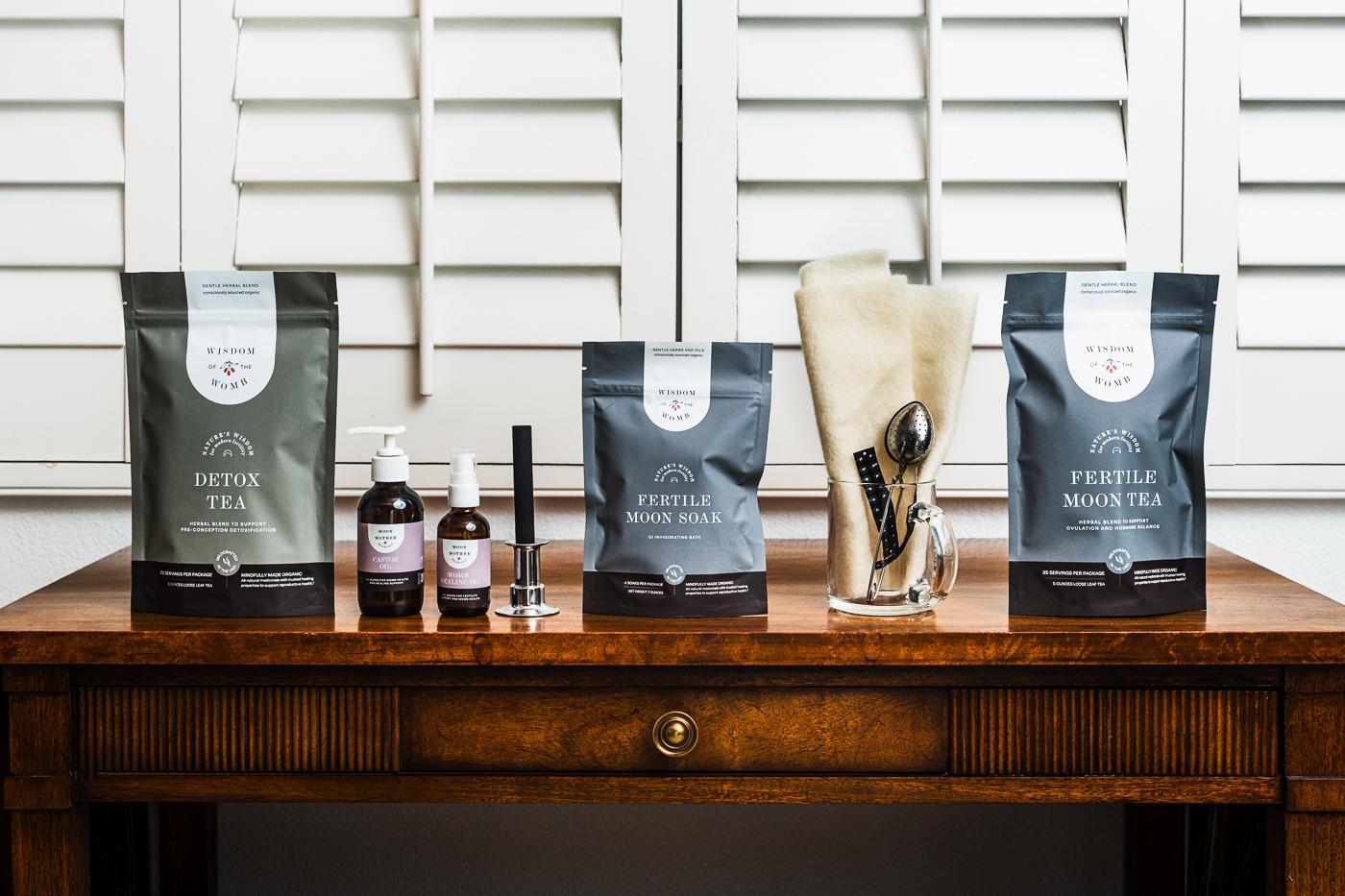
🌿 Herbal Support
Our blends are designed to support the body in moving toward ovulation, rather than forcing it.
In this phase of the cycle, we often focus on nourishment, circulation, and supporting the body’s natural hormonal communication.
Our Fertile Moon Tea and Ovulation Support Bundle were created with this in mind. They’re designed to:
-
support healthy blood flow and circulation
-
nourish the body at a foundational level
-
reduce inflammation
-
help regulate the cycle over time
These are not quick fixes, but tools that support the body in returning to a more consistent rhythm.
🌿 If You’re Not Sure Where to Start
If you’re not ovulating or your cycle feels inconsistent, this is something we work with regularly.
You don’t have to try to figure it out on your own.
You can reach out to our support team, and we’ll help you understand what may be affecting your cycle based on your symptoms and guide you toward what would be most supportive.
You can also explore our Ovulation Support Bundle or Fertile Moon Tea, which were specifically created to support this phase of the cycle.
-
Anovulation can be caused by stress, hormonal imbalances, nutrient deficiencies, inflammation, thyroid issues, or conditions like PCOS.
-
Yes. Chronic stress can disrupt the hormonal signals between the brain and ovaries, preventing ovulation.
-
Yes. When the underlying causes are addressed and the body is supported, ovulation can return.
🌱 Closing
Ovulation isn’t something you can force.
It’s something the body moves toward when it has what it needs.
And when you begin to support those needs—consistently and in a way that works with your body—the cycle often starts to shift.
Written by Ariele Myers, Licensed Acupuncturist and Integrative Fertility Specialist with 20+ years supporting women’s reproductive health.