
It’s about women. It’s about sisterhood. It’s about connection.
What a Short Luteal Phase Might Be Telling You

What causes a short luteal phase and can it be fixed naturally?
A short luteal phase is not just a progesterone problem — it reflects the body's overall functioning, and when root causes like stress, inflammation, and nutrient depletion are addressed, it can often lengthen naturally.
If you’ve been tracking your cycle and noticing that your luteal phase feels short—maybe your period comes sooner than expected, or you’re spotting before it begins—you’ve probably started wondering what that means.
You might have heard that a short luteal phase can make it harder to get pregnant.
But beyond that, most explanations stop at hormones.
And while hormones are involved, they’re not the full picture.
🌙 What Is the Luteal Phase?
The luteal phase is the second half of your cycle, the time between ovulation and your period.
After ovulation, the body produces progesterone. This hormone helps prepare the uterine lining for a potential pregnancy and supports early implantation.
A typical luteal phase is around 12–14 days.
When it’s shorter than that—generally under 10–11 days—it can be more difficult for the body to fully support implantation.
🔄 What Does a Short Luteal Phase Mean?
A short luteal phase is often described as a progesterone issue.
That’s not incorrect.
But it’s incomplete.
Progesterone doesn’t just exist on its own. It’s produced in response to ovulation and depends on how well the body is functioning as a whole.
So when progesterone is low or the luteal phase is short, the question becomes:
What is affecting the body’s ability to sustain that phase?
🔥 Common Factors That Affect the Luteal Phase
Several underlying factors can contribute to a shortened luteal phase:
-
stress and nervous system dysregulation
-
insufficient or weak ovulation
-
inflammation in the body
-
blood sugar instability
-
nutrient depletion
-
thyroid imbalance
Even when these aren’t extreme, they can influence how long the body is able to maintain adequate progesterone levels.

🌊 Ovulation Quality Matters
One of the most important pieces here is ovulation itself.
A strong, well-supported ovulation leads to stronger progesterone production.
If ovulation is inconsistent, delayed, or under-supported, the luteal phase often reflects that.
This is why focusing only on the second half of the cycle can miss what’s actually driving the issue.
🧠 The Nervous System + Progesterone
Progesterone is often referred to as a calming hormone.
It supports the nervous system and helps create a sense of steadiness in the body.
When the body is under chronic stress, progesterone production can be affected.
This can shorten the luteal phase and also show up as:
-
anxiety before your period
-
disrupted sleep
-
feeling less resilient to stress
The cycle reflects what the body is carrying.
🌿 Tracking Your Hormones
Your hormones are telling a story every single day of your cycle. The question is — are you able to read it?
Mira tracks LH, E3G, PdG, and FSH so you're not guessing anymore. No single blood draw on one random day. Actual daily data, your actual patterns, unfolding over time. When you can see what your hormones are doing daily and month to month, you can better support your body and its needs more accurately. That's why we became Mira Providers.
Use code 2WISDOMWOMB20 at checkout for your 20% discount, and list us as your provider to connect with our dashboard. When we are your provider, we can view your numbers and curate even more personalized product and supplement recommendations for your unique needs. Learn more about this here.
🌿 A Chinese Medicine Perspective
From a Chinese Medicine lens, the luteal phase is closely tied to warmth, nourishment, and the body’s ability to hold.
This phase relies on:
-
strong, nourished blood
-
adequate warmth (Yang energy)
-
smooth circulation
When there is:
-
deficiency (not enough nourishment)
-
cold (lack of warmth)
-
stagnation (lack of movement)
…the body may not be able to sustain the luteal phase.
These patterns often show up through symptoms that can seem unrelated at first, but are part of the same picture.
🌸 What Support Can Look Like
Supporting the luteal phase isn’t just about boosting progesterone directly.
It’s about strengthening the system that produces and maintains it.
This can include:
-
supporting ovulation earlier in the cycle
-
nourishing the body with enough fats, protein, and minerals
-
stabilizing blood sugar
-
reducing inflammation
-
supporting thyroid and metabolic health
-
creating more space for rest, especially after ovulation
When the body is more supported, the luteal phase often lengthens naturally.
🌿 Where This Work Comes In
Instead of only focusing on progesterone levels, we look at the full pattern.
What’s happening in the first half of your cycle? How is your energy? What symptoms are showing up?
These details help us understand what may be affecting your luteal phase, even if lab work appears normal.

🌿 The Fertile Mama Method
Inside the Fertile Mama Method, this is exactly the kind of pattern we work with.
We look at your cycle as a whole, identify the imbalances that may be shortening the luteal phase, and support your body through:
-
nourishment
-
lifestyle changes
-
and targeted herbal support
This allows the body to move toward a more stable and supported cycle.
🌿 Herbal Support
Supporting the luteal phase is deeply connected to warmth, nourishment, and the body’s ability to sustain progesterone.
From a Chinese Medicine perspective, this phase relies on strong Yang energy—the warmth that allows the body to hold and support a potential pregnancy.
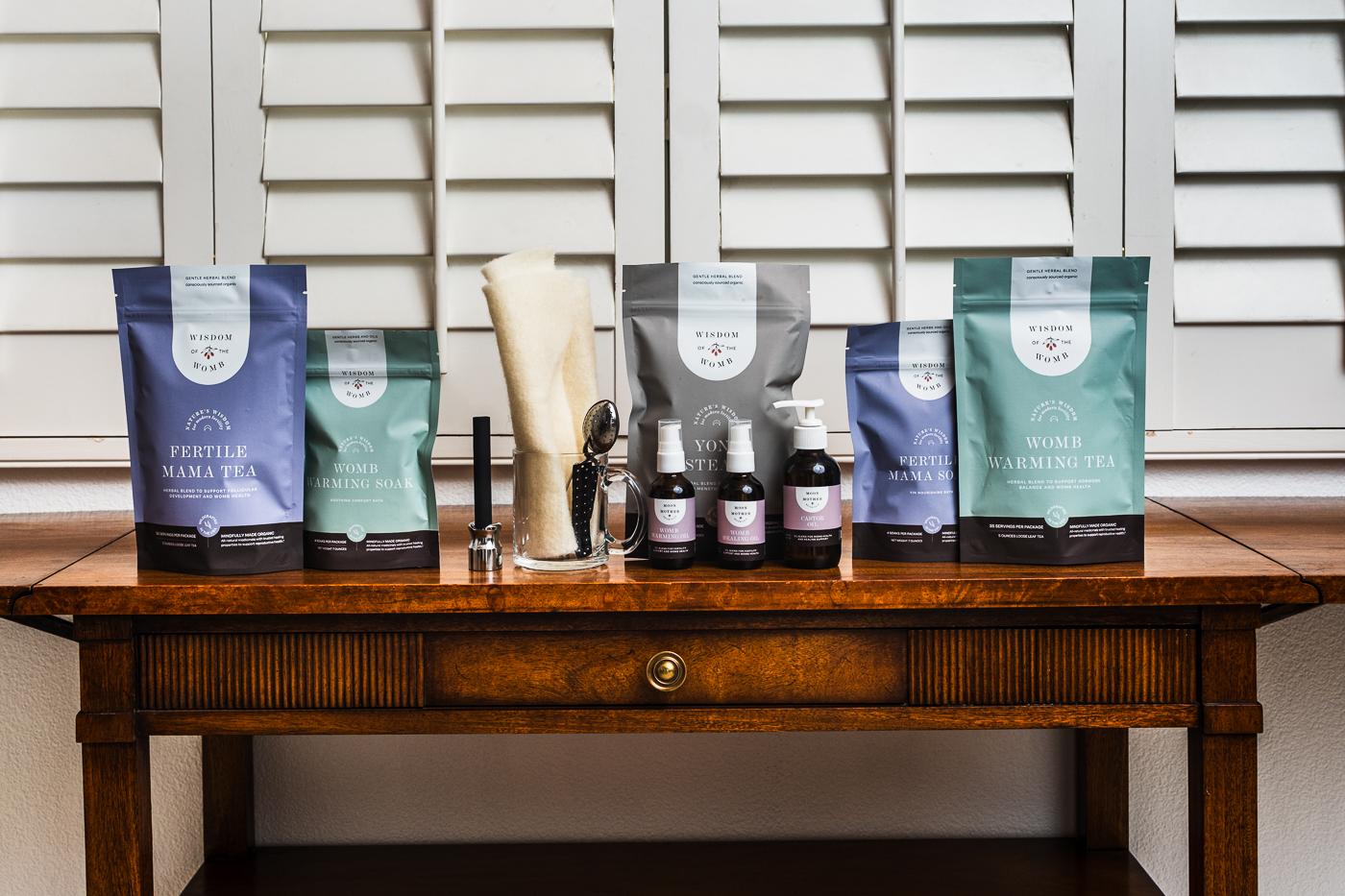
Our Womb Warming Fertility Bundle and Womb Warming Tea were created with this in mind.
They’re designed to:
-
support progesterone production by strengthening the second half of the cycle
-
bring warmth to the womb and improve circulation
-
support healthy egg development, leading to a stronger corpus luteum
-
help the body sustain the luteal phase more effectively
This is not about forcing progesterone, but about supporting the conditions that allow the body to produce and maintain it.
🌿 If You’re Not Sure Where to Start
If you’re noticing a short luteal phase, spotting, or difficulty sustaining the second half of your cycle, this is something we work with often.
You don’t have to try to figure it out on your own.
You can reach out to our support team, and we’ll help you understand what may be affecting your cycle based on your symptoms and guide you toward what would be most supportive.
You can also explore our Womb Warming Fertility Bundle or Womb Warming Tea, which were specifically created to support progesterone, luteal phase warmth, and overall cycle stability.
-
A luteal phase shorter than about 10–11 days is generally considered short.
-
Low progesterone can be influenced by stress, poor ovulation quality, inflammation, thyroid issues, and nutrient deficiencies.
-
It can be. Spotting before menstruation is often associated with lower progesterone levels.
🌱Closing
A short luteal phase is not just a number on a chart.
It’s a reflection of how the body is functioning as a whole.
And when you begin to support that system—consistently and in a way that works with your body—the cycle often begins to shift.
Written by Ariele Myers, Licensed Acupuncturist and Integrative Fertility Specialist with 20+ years supporting women’s reproductive health.